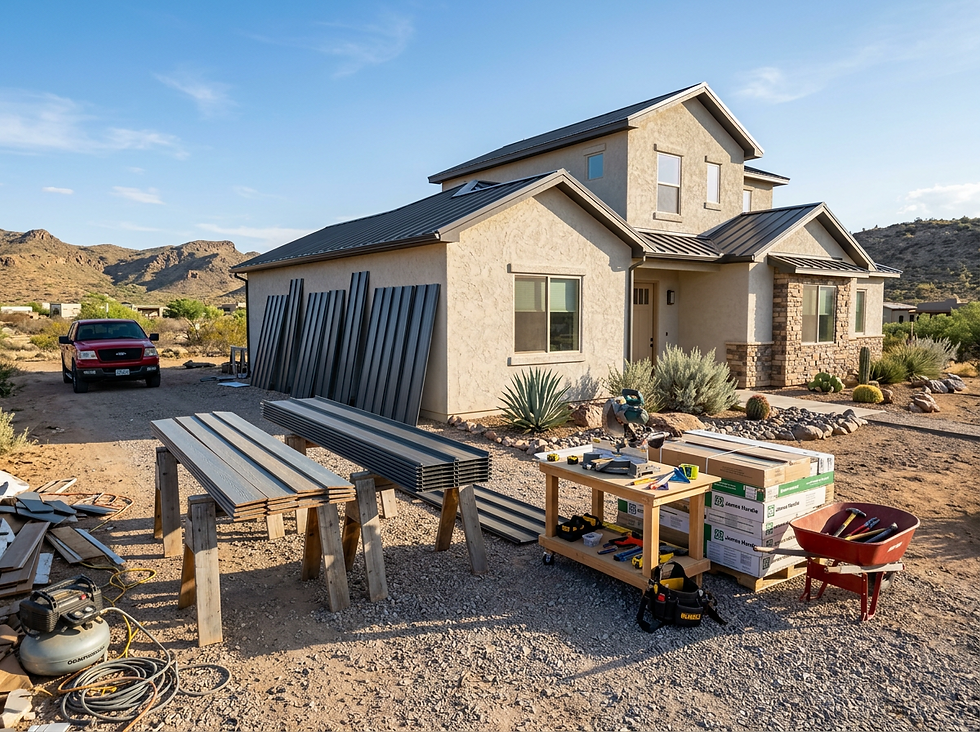
Tucson Siding Replacement Costs Vinyl Wood Fiber Cement and Metal Compared
Tucson is tough on exterior materials. Long stretches of sun, monsoon rain, dust, and big day-to-night temperature swings all affect how siding looks and lasts. That is why the lowest bid is not always the best value. A material that costs less on day one can become expensive if it fades, warps, needs frequent repainting, or traps heat against the wall.
For most homes in Tucson, siding replacement costs fall into a wide range because the material, home design, prep work, and installation details all matter. A simple one-story home with easy access may price very differently from a two-story house with damaged sheathing, detailed trim, or mixed exterior materials.
The guide below compares typical installed costs for vinyl, wood, fiber cement, and metal siding in Tucson, along with the practical pros and cons of each option.

What siding replacement usually costs in Tucson
Siding is often priced by the square foot or by the “square.” One siding square equals 100 square feet. Installed pricing usually includes material, labor, fasteners, basic trim, and standard installation. It may not include removing old siding, repairing hidden damage, upgrading insulation, or painting.
Here are realistic planning ranges for Tucson homes.
Siding material | Typical installed cost per square foot | Cost per 100-square-foot square | Estimated cost for 1,500 sq. ft. | Estimated cost for 2,000 sq. ft. |
Vinyl siding | $6 to $12 | $600 to $1,200 | $9,000 to $18,000 | $12,000 to $24,000 |
Wood siding | $10 to $18 | $1,000 to $1,800 | $15,000 to $27,000 | $20,000 to $36,000 |
Fiber cement siding | $9 to $16 | $900 to $1,600 | $13,500 to $24,000 | $18,000 to $32,000 |
Metal siding | $12 to $22 | $1,200 to $2,200 | $18,000 to $33,000 | $24,000 to $44,000 |
These ranges are for broad planning, not a final quote. Tucson homes often combine stucco, siding, stone, brick, or trim accents. A contractor may measure only the siding sections, not the full wall surface of the home.
Common add-on costs
A complete project can include more than panels and labor. The following items can change the final number.
Project item | Typical cost range |
Removing and disposing of old siding | $1 to $3 per sq. ft. |
House wrap or weather barrier | $0.50 to $1.50 per sq. ft. |
Foam insulation board | $1 to $3 per sq. ft. |
Rotten sheathing repair | $5 to $15 per sq. ft. of affected area |
Trim replacement | $3 to $10 per linear ft. |
Exterior painting for wood or fiber cement | $2 to $6 per sq. ft. |
Permit, if required | Varies by project scope |
A home with clean walls, simple corners, and little repair work will land closer to the low end. A home with old siding removal, dry rot, custom trim, and difficult access will move toward the high end.
Why Tucson siding prices vary so much
The material is the most visible cost, but it is only one part of the estimate. Labor, wall condition, home shape, and long-term performance all affect value.
Heat and UV exposure
Tucson sun is not gentle. UV rays can fade colors, dry out caulk, and stress lower-quality materials. Dark colors can absorb more heat, which may increase expansion and contraction. This matters most with vinyl and some painted products.
A higher-grade material or better finish can cost more upfront, but it may hold color longer and need less maintenance.
Monsoon weather
Tucson is dry much of the year, then rain can arrive hard and fast during monsoon season. Wind-driven rain can push water behind weak joints, trim gaps, and poor flashing.
Good installation matters as much as good siding. A low-cost product installed over weak flashing can still fail.
Wall condition
The final price often changes after the old siding comes off. Hidden problems may include:
Cracked or missing sheathing
Water damage around windows
Insect damage
Failed house wrap
Gaps around penetrations
Old trim that no longer holds fasteners well
Repairing these areas adds cost, but skipping them can shorten the life of the new siding.
Home design and access
Straight walls are faster to cover. Complex homes take more cutting, fitting, sealing, and trim work.
Costs can rise for:
Two-story sections
Tall gables
Bay windows
Multiple bump-outs
Attached patio covers
Tight side yards
Detailed window and door trim
Energy efficiency goals
Siding alone does not work like attic insulation. Most siding materials have a low R-value. The bigger energy value comes from air sealing, house wrap, insulated panels, and foam board added during installation.
In Tucson, energy efficiency often means reducing heat gain, improving air sealing, and choosing colors and assemblies that handle intense sun well.

Vinyl siding costs less upfront
Vinyl is usually the most budget-friendly siding option. It is common because it installs quickly, comes in many colors, and does not need painting.
In Tucson, vinyl siding typically costs $6 to $12 per square foot installed.
Basic vinyl sits at the lower end. Insulated vinyl, thicker panels, darker fade-resistant colors, and upgraded trim packages cost more.
What affects vinyl siding pricing
Vinyl pricing changes based on panel thickness, profile, color, insulation, and trim. A basic horizontal lap siding is usually cheaper than shake-style vinyl or board-and-batten panels.
Insulated vinyl costs more because it includes foam backing. That backing can help the siding feel more solid and may reduce small air leaks when installed as part of a complete wall system.
Pros of vinyl siding
Lower upfront cost
Low maintenance
Many style choices
Quick installation
Vinyl is often the cheapest installed option among the four materials in this guide.
It does not need painting, staining, or sealing. Washing it occasionally is usually enough.
Horizontal lap, vertical panels, shake profiles, and varied colors are available.
Lighter panels can reduce labor time on straightforward homes.
Cons of vinyl siding
Heat sensitivity
Fading risk
Less premium appearance
Repair matching can be hard
Lower-quality vinyl can warp or buckle if it gets too hot or is installed too tightly.
Intense Tucson sun can fade some colors over time, especially darker or lower-grade products.
Vinyl may not have the depth or texture of wood, fiber cement, or metal.
Older faded panels may not match new replacement panels.
Best fit for Tucson homes
Vinyl works best for homeowners who want a lower-cost exterior with simple upkeep. It is a practical choice for rental homes, budget-conscious projects, or homes where siding covers selected sections rather than the entire exterior.
For Tucson, choose higher-quality vinyl rated for hot climates, leave proper expansion space, and avoid poor installation that traps panels too tightly.
Wood siding has character but needs care
Wood siding brings warmth that synthetic materials try to copy. It can look beautiful on ranch homes, historic-style houses, cabins, casitas, and accent walls. It also allows many profiles, from bevel siding to shakes and board-and-batten.
In Tucson, wood siding usually costs $10 to $18 per square foot installed.
Premium species, custom milling, staining, and detailed trim can push costs higher.
What affects wood siding pricing
Wood costs depend on species, grade, profile, finish, and installation complexity. Cedar and redwood tend to cost more than basic pine. Vertical siding can require different framing or furring details. Shakes and shingles take more labor than standard lap boards.
Finishing is a major cost factor. Bare wood needs primer, paint, stain, or sealer. In Tucson, that finish protects against UV damage and helps reduce cracking and drying.
Pros of wood siding
Natural appearance
Design flexibility
Good for accents
Traditional appeal
Real wood has texture, grain, and depth that other materials imitate.
It can be painted, stained, cut, shaped, and repaired in many ways.
Wood can add warmth to entryways, gables, patios, and courtyard walls.
It suits certain architectural styles better than vinyl or metal.
Cons of wood siding
Higher maintenance
Sun damage
Pest concerns
Moisture risk
Wood needs periodic sealing, staining, or painting.
Tucson UV can dry, fade, and weather exposed wood faster than in milder climates.
Untreated or poorly maintained wood can attract insects.
Poor flashing or failed finish can allow swelling, cupping, or rot.
Best fit for Tucson homes
Wood is best when appearance matters and regular maintenance is part of the plan. It can be a strong choice for shaded areas, covered patios, porch ceilings, entry accents, and homes where natural materials are part of the design.
For full-house siding, wood demands commitment. Budget not only for installation, but also future cleaning, sealing, staining, or repainting.

Fiber cement balances cost, strength, and appearance
Fiber cement is made from cement, sand, cellulose fibers, and other ingredients. It is popular because it can mimic wood while offering better resistance to fire, pests, and weather damage.
In Tucson, fiber cement siding typically costs $9 to $16 per square foot installed.
It often costs more than vinyl but less than many premium wood or metal systems.
What affects fiber cement siding pricing
Fiber cement is heavier than vinyl, so labor matters. Installers need the right tools, dust control, fasteners, flashing, and clearances. Trim choices also affect price.
Factory-primed fiber cement needs painting after installation. Factory-finished products cost more upfront but can provide a more controlled finish.
Pros of fiber cement siding
Strong durability
Pest resistance
Fire resistance
Wood-like look
Fiber cement handles sun, wind, and impact better than many lighter materials.
It does not attract termites the way untreated wood can.
It is noncombustible, which can matter in hot, dry regions.
Many products offer lap, shingle, and board-and-batten styles.
Cons of fiber cement siding
Heavier installation
Paint maintenance
Moisture details matter
Cutting dust
Proper installation takes skill and usually costs more than vinyl.
Painted fiber cement will need repainting over time.
Incorrect clearances near roofs, patios, and grade can cause problems.
Installers need safe cutting practices and proper equipment.
Best fit for Tucson homes
Fiber cement is often a strong middle-ground choice. It offers a more solid feel than vinyl, a wood-like appearance, and less upkeep than real wood.
It is a good fit for homeowners who want long-term durability without moving into the highest-cost siding category. It also suits Tucson homes where sun resistance, pest resistance, and clean lines matter.
Metal siding offers modern durability at a higher price
Metal siding can mean steel, aluminum, corrugated panels, standing seam-style wall panels, or architectural metal systems. Its look can be modern, rustic, industrial, or desert contemporary depending on the profile and finish.
In Tucson, metal siding often costs $12 to $22 per square foot installed.
Simple corrugated panels may cost less. Architectural panels, concealed fasteners, custom trim, and premium finishes cost more.
What affects metal siding pricing
Metal prices depend on material type, gauge, coating, panel profile, and installation system. Aluminum resists rust and is lighter. Steel is strong but needs proper coating and edge protection. Concealed fastener systems usually cost more than exposed fastener panels.
Metal expands and contracts with temperature swings. Tucson’s hot days and cooler nights make proper fastening and spacing critical.
Pros of metal siding
Long service life
Low maintenance
Fire and pest resistance
Modern style
Quality metal systems can last a long time with limited upkeep.
Many finishes only need washing and occasional inspection.
Metal does not feed insects and can perform well in dry climates.
It works well with desert contemporary architecture and mixed-material exteriors.
Cons of metal siding
Higher upfront cost
Dent risk
Heat movement
Style limits
Metal is usually one of the more expensive installed options.
Hail, impacts, or falling branches can dent some panels.
Expansion and contraction must be handled correctly.
Some homes look better with warmer or more traditional siding materials.
Best fit for Tucson homes
Metal is a strong choice for modern homes, accent walls, ADUs, additions, and areas where low maintenance is a priority. It also works well when paired with stucco, stone, block, or wood accents.
For Tucson, ask about finish quality, heat movement, fastener type, and trim details. These choices shape both the look and the lifespan of the project.
How durability changes the real cost
Upfront price matters, but long-term cost can change the winner.
A lower-cost siding can become expensive if it needs frequent repairs or early replacement. A higher-cost material can be a better value if it lasts longer and needs less care.
Here is a simple way to compare value:
Material | Upfront cost | Maintenance level | Durability in Tucson conditions |
Vinyl | Low to moderate | Low | Good if high-quality and installed well |
Wood | Moderate to high | High | Good with consistent upkeep |
Fiber cement | Moderate to high | Moderate | Very good with proper installation and paint |
Metal | High | Low to moderate | Very good with quality finishes and correct fastening |
Expected maintenance by material
Vinyl usually needs washing and occasional caulk or trim checks. Cracked or warped panels may need replacement.
Wood needs the most care. Expect regular inspections, paint or stain upkeep, and attention to cracks, gaps, and exposed end grain.
Fiber cement needs paint maintenance and joint checks. It performs best when kept clear of standing water and soil contact.
Metal needs washing, fastener checks if exposed fasteners are used, and inspection for scratches or coating damage.
How energy efficiency should affect your choice
Tucson cooling costs make energy performance a real concern. Still, siding material alone is not the full story. The wall assembly matters more.
The most useful upgrades often include:
A continuous weather barrier
Sealed seams and penetrations
Foam insulation board under siding
Insulated vinyl panels where appropriate
Light or medium exterior colors
Proper ventilation behind certain siding systems
Good flashing around windows and doors
Vinyl with foam backing may add some insulation value. Fiber cement and metal do not add much insulation by themselves, but both can be installed over foam board. Wood offers modest natural insulation, but not enough to replace dedicated insulation.
Color also matters in the desert. Lighter colors reflect more sunlight. Darker colors can look dramatic, but they may run hotter and show fading sooner depending on material and finish.

Which siding material is the best value in Tucson
The best choice depends on budget, style, maintenance tolerance, and how long the home will be kept.
Best lower-cost option
Vinyl is usually the best lower-cost choice. It keeps the budget under control and avoids painting. Choose better-grade panels for Tucson heat and UV exposure.
Best natural look
Wood wins for natural beauty. It works especially well as an accent material. For full-house siding, it needs the most maintenance planning.
Best balanced option
Fiber cement is often the best balance of appearance, durability, and long-term value. It suits many Tucson homes because it handles pests, fire concerns, and sun exposure better than many alternatives when installed correctly.
Best modern low-maintenance option
Metal is a premium choice with strong durability and a clean look. It costs more upfront, but it can make sense for modern homes or accent areas where long service life matters.
Questions to ask before signing a siding estimate
A clean estimate should explain what is included and what could cost extra. Before choosing an installer, ask direct questions.
What exact siding product, grade, and profile is included?
Does the price include removal and disposal of old siding?
How will damaged sheathing or trim be priced if found?
What weather barrier will be installed?
Will foam board or insulation be added?
How will windows, doors, corners, and penetrations be flashed?
Is painting included if the material needs it?
What labor and product warranties apply?
Who handles permits if they are required?
How will expansion, contraction, and drainage be handled?
A good estimate should be easy to understand. If two bids are far apart, compare product grade, trim, prep work, insulation, warranty, and repair allowances before choosing the lower number.
For a local breakdown with more Tucson-specific examples, see this guide to siding costs in Tucson.
FAQ
How much does Tucson siding installation cost for an average home?
Many projects fall between $12,000 and $32,000, depending on the siding area and material. Smaller accent projects can cost less, while full exterior projects with repairs, insulation, and premium materials can cost more.
Is vinyl siding a good choice for Tucson heat?
Vinyl can work in Tucson if the product is high quality and installed with room for expansion. Lower-grade vinyl or poor installation can lead to warping, buckling, or fading.
Does fiber cement need to be painted?
Many fiber cement products need paint, either after installation or as a factory-finished option. Factory-finished siding usually costs more upfront. Painted fiber cement will still need repainting over time.
Is metal siding too hot for Arizona homes?
Metal can get hot in direct sun, but the wall system behind it matters. Proper installation, air gaps, insulation, and color choice can help manage heat. Metal is often used successfully in desert climates.
Which siding lasts the longest in Tucson?
Quality fiber cement and metal are often strong long-term choices. Wood can last a long time with excellent maintenance. Vinyl can also perform well, but product quality and UV resistance make a big difference.

The smart way to compare siding costs
A good siding choice is not only about the installed price per square foot. It is about how the material performs in Tucson sun, how often it needs work, how it fits the home, and whether the installation protects the walls behind it.
Vinyl is the budget-friendly option. Wood brings the most natural character, along with the most upkeep. Fiber cement offers a strong balance of durability and appearance. Metal costs more, but it delivers a clean style and long-term durability when installed well.
The best next step is to compare real estimates using the same scope of work. Match material grade, removal, repairs, weather barrier, insulation, trim, paint, and warranty side by side. That makes the true cost much easier to see.