


Roof Fascia Explained : Soffits, Overhangs, Repairs and Arizona Sun Damage
A roofline can look simple from the street, but a lot is happening along that narrow band beneath the shingles or tiles. The fascia, soffits, overhangs, drip edge, and gutters all work together to move water away, let the attic breathe, protect the roof deck, and give the home a finished edge.
When one part fails, the others usually feel it. A cracked fascia board can let water reach the rafter tails. A blocked soffit can trap heat in the attic. A missing drip edge can send rain behind the gutter. In Arizona, the sun adds another layer of stress by drying, fading, warping, and breaking down exposed materials faster than many homeowners expect.
This guide explains what each part does, how they connect, what Arizona heat can do to them, and when restoration, repair, or replacement makes sense.
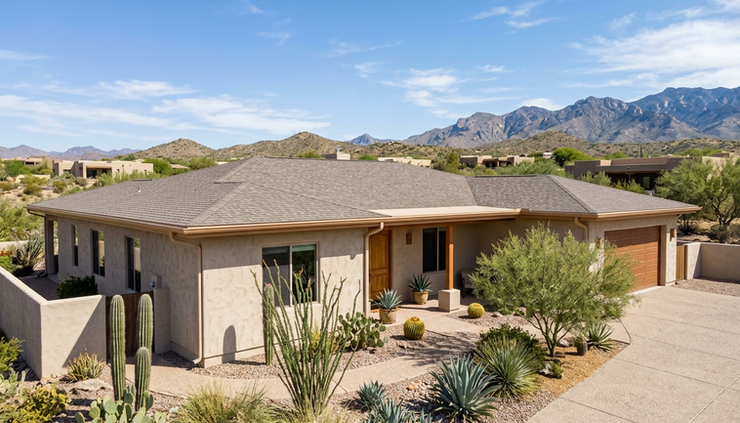
What roof fascia is and why it matters
The fascia is the long, straight board or trim piece that runs along the lower edge of the roof. It usually sits vertically at the end of the rafters or trusses. From the ground, it often looks like a smooth horizontal band just below the roof edge and above the soffit or gutter.
If the question is what is roof fascia, the simplest answer is this: it is the finished front edge of the roof structure. It covers the rafter ends, supports certain gutter systems, helps seal the roof edge, and gives the home a clean appearance.
Fascia can be made from several materials, including:
Wood
Engineered wood
Fiber cement
Aluminum
Steel
Vinyl or PVC trim
Composite materials
On many homes, the fascia starts as wood and then gets painted, wrapped, or covered with another material for protection. In the Southwest, painted wood fascia is common, but it needs steady maintenance because intense sunlight and dry air are hard on exterior coatings.
A fascia roof connection also helps tie the look of the roof into the walls. When the fascia is straight, sealed, and properly painted or wrapped, the roofline looks sharp. When it begins to peel, bow, rot, or separate, the whole exterior can look tired even if the roof itself is still in good condition.
Soffits and overhangs work with the fascia
Fascia is only one part of the roof edge. Soffits and overhangs complete the assembly.
What soffits are
The soffit is the underside of the roof overhang. Stand near an exterior wall and look up under the eave. The flat or angled surface above you is the soffit.
Soffits may be solid or vented. Vented soffits have small holes, slots, or panels that allow air to enter the attic. That airflow matters because attic ventilation helps reduce trapped heat and moisture.
Common soffit materials include:
Painted wood
Plywood
Fiber cement panels
Aluminum panels
Vinyl panels
Stucco-finished soffits on some Southwest homes
A soffit is not just there for looks. It protects the underside of the rafters, blocks pests from entering the roof cavity, and helps attic ventilation when designed with vents.
What roof overhangs are
The overhang is the part of the roof that extends beyond the exterior wall. It includes the rafters or truss tails, the roof decking, the roof covering, and the visible trim pieces at the edge.
Overhangs serve several purposes:
They shade walls and windows.
They help keep rain away from siding and stucco.
They protect doorways and walkways.
They give the home depth and architectural character.
They create space for soffit ventilation.
In Arizona, overhangs are especially valuable because shade is not just a comfort feature. Shaded walls and windows absorb less heat, and shaded exterior materials often last longer than those exposed to full sun all day.
How fascia, soffits, and overhangs connect
A typical roof edge works like this:
The roof deck extends to the edge of the roof.
The fascia board caps the ends of the rafters or trusses.
The soffit closes the underside of the overhang.
The drip edge directs water off the roof edge.
The gutter catches water and carries it away.
When installed correctly, these parts support each other. The soffit protects the underside. The fascia covers the front. The drip edge protects the transition between roof and fascia. The gutter manages runoff.
When installed poorly, the weak point often shows up as peeling paint, swollen wood, rust stains, sagging gutters, or water marks below the roof edge.

The purpose of fascia in a roofing system
Fascia looks decorative, but it does real work. A roof without a sound fascia edge is more exposed to weather, pests, and water damage.
It protects rafter tails and roof edges
Rafter tails are the ends of the structural roof members that extend beyond the wall. Without fascia, those ends would be exposed to sun, wind, and rain. Fascia covers them and helps shield the vulnerable end grain of the wood.
End grain absorbs moisture more easily than the face of a board. When rainwater repeatedly hits exposed wood, decay can start. In Arizona, moisture may not be constant, but monsoon storms can deliver sudden heavy rain. If the fascia and drip edge are not doing their jobs, water can find its way into small gaps.
It supports gutters
Many gutter systems attach directly to the fascia. The gutter hangers fasten through the back of the gutter and into the fascia board or framing behind it.
If the fascia is soft, cracked, or rotted, the gutter may begin to pull away. Once that happens, runoff can spill behind the gutter instead of flowing through it. That water can stain stucco, soak trim, damage paint, and erode soil near the foundation.
A gutter is only as reliable as the surface it attaches to.
It improves curb appeal
Fascia creates one of the strongest horizontal lines on the exterior of a home. Fresh, straight fascia makes the roof look well maintained. Peeling, sunburned, or warped fascia can make even a newer roof look neglected.
This matters for pride of ownership, but it also matters when selling a home. Buyers often notice roofline damage because it is visible from the street and can suggest larger maintenance issues.
It helps seal out pests
Open gaps behind fascia or near soffits can attract birds, insects, bats, rodents, and other pests. Once they enter the attic or roof cavity, removal and repairs become more complicated.
The fascia and soffit should meet tightly, with clean joints and no open cavities. Vented soffits need screens or perforations small enough to allow air in while keeping pests out.
Drip edge and fascia wrap are different but related
Drip edge and fascia wrap often get mentioned together because they both protect the roof edge. They are not the same thing.
What drip edge is
Drip edge is a thin metal flashing installed along roof edges. It usually sits under shingles or roofing material at the edge and extends slightly over the fascia. Its job is to direct water away from the roof deck and fascia.
A properly installed drip edge helps prevent water from curling back under the roofing material. That curling action can wet the roof deck, stain the fascia, or send water behind the gutter.
Drip edge is commonly made from aluminum, galvanized steel, or painted steel. It comes in different profiles depending on the roofing system.
A missing or poorly placed drip edge can cause:
Dark staining along the fascia
Peeling paint near the top edge of the board
Soft spots in wood fascia
Water running behind gutters
Roof deck edge damage
What fascia wrap is
Fascia wrap is a protective covering installed over the fascia board. It is often made from aluminum, vinyl-coated aluminum, steel, or PVC material. The wrap acts like a skin that shields the fascia from sun, rain, and surface wear.
Fascia wrap can reduce painting needs, but it must be installed carefully. If water gets behind the wrap and cannot dry, hidden wood damage can occur. This is why quality detailing at seams, corners, drip edge transitions, and gutter connections matters.
Fascia wrap is not a cure for rotten wood. If the existing fascia is soft or decayed, the damaged material should be repaired or replaced before wrapping.
Think of fascia wrap as protection for a sound board, not a disguise for a failing one.
Gutters play a major role in fascia health
Gutters collect roof runoff and carry it to downspouts. Their job sounds simple, but their relationship with fascia, soffits, and overhangs is more complex than it appears.
When gutters work well, they reduce water exposure along the roof edge and exterior walls. When they fail, they can worsen the exact damage they were meant to prevent.
How gutters protect fascia and soffits
A properly sloped gutter catches water as it leaves the roof and sends it to a downspout. This keeps water from pouring directly over the fascia and onto the soffit edge.
During Arizona monsoon storms, intense rainfall can overwhelm undersized, clogged, or poorly pitched gutters. Water may spill over the front or back. Backflow is especially damaging because it can soak the fascia and run into gaps behind the gutter.
Good gutter performance depends on:
Correct placement under the drip edge
Secure attachment to solid fascia
Proper slope toward downspouts
Clear channels free of leaves and debris
Downspouts that discharge away from the home
When gutters cause damage
Gutters can damage fascia when they are too heavy, clogged, loose, or incorrectly installed. Standing water adds weight. Debris holds moisture. Loose fasteners widen holes in the fascia. Splashing water leaves stains and breaks down paint.
Warning signs include:
Gutters pulling away from the roofline
Long streaks on fascia below gutter seams
Water marks on stucco under the eaves
Sagging sections during rain
Rust or corrosion near fasteners
Soft wood behind the gutter
If a gutter has pulled loose, the repair should include a close look at the fascia behind it. Refastening into damaged wood will not hold for long.
How the Arizona sun affects fascia, soffits, and overhangs
Arizona homes face a mix of conditions that can age roof-edge materials quickly. Tucson and other desert communities see intense ultraviolet exposure, long hot seasons, dry air, dust, and sudden storm events. That combination is tough on paint, caulk, wood, vinyl, and some metal finishes.
UV exposure breaks down coatings
Sunlight slowly degrades exterior paint and coatings. On fascia and soffits, the damage often starts as fading or chalking. Chalking looks like a powdery residue on the surface. Over time, the coating loses flexibility and starts to crack or peel.
Once paint fails, wood fascia becomes more vulnerable. Dry wood can split. Open cracks let water in during storms. The cycle repeats as the sun dries the board again.
South- and west-facing rooflines usually take the most punishment because they receive strong afternoon sun.
Heat causes expansion and movement
All exterior materials move with temperature changes. Metal expands and contracts. Vinyl can warp or ripple if it gets too hot or if it was fastened too tightly. Wood expands and shrinks with moisture changes, even in dry climates.
Small movement is normal. Problems start when joints are poorly detailed, fasteners are overdriven, or materials cannot move as designed.
Common heat-related issues include:
Open seams in fascia wrap
Warped vinyl soffit panels
Cracked caulk lines
Paint splitting at board joints
Oil-canning or waviness in thin metal
Gaps where trim meets stucco
Dry air can make wood brittle
Arizona dryness can pull moisture from exposed lumber. That can lead to checking, splitting, or cupping. Once wood loses its protective coating, direct sun accelerates the damage.
Dry wood may still look solid from a distance. Up close, it may show hairline cracks, raised grain, and brittle edges. These areas need prep before repainting, not just a quick coat over the top.
Monsoon rain tests weak spots
The desert is dry for much of the year, but storm season can bring heavy, wind-driven rain. Fascia and soffits that looked fine in dry weather may reveal problems after a storm.
Look for stains, drips, or damp areas after rain. Water patterns often show where the system is failing, especially near gutter seams, roof valleys, corners, and downspouts.

Restoration, repair, and replacement options
Not every damaged fascia board needs full replacement. The right approach depends on the material, depth of damage, water exposure, and how the roof-edge system is built.
Restoration works when the material is still sound
Restoration focuses on bringing existing fascia and soffits back into good condition. This often makes sense when the damage is mostly cosmetic or surface level.
A typical restoration process may include:
Washing dust and chalk from the surface
Scraping loose paint
Sanding rough edges
Sealing cracks and joints
Spot-priming bare wood or metal
Repainting with a high-quality exterior coating
In Arizona, surface prep matters as much as the paint itself. New paint will fail early if it goes over chalky, dusty, or sun-baked surfaces without proper cleaning and primer.
Restoration is a good fit when:
Wood is firm, not soft
Paint failure is limited
Seams are intact
Gutters are secure
There are no signs of active leaks
Repair makes sense for isolated damage
Repair targets specific problem areas. This might include replacing one section of fascia, fixing a soffit panel, sealing a joint, or correcting a gutter attachment point.
Common repairs include:
Replacing a short run of rotted fascia
Refastening loose soffit panels
Sealing gaps where pests could enter
Repairing cracked stucco at the eave
Replacing corroded flashing
Adding or correcting drip edge details
Repair is often the best choice when damage is limited to one area, such as a gutter corner, a roof valley discharge point, or a section that receives extreme sun.
Replacement is the better choice when damage is widespread
Replacement becomes the smart choice when the fascia is warped, rotten, split through, or failing across long sections. Covering weak material with paint or wrap will not solve the problem.
Full or partial replacement may involve removing gutters, taking off damaged fascia, inspecting rafter tails, installing new boards or trim, adding drip edge where needed, and repainting or wrapping the finished surface.
Replacement may be needed when:
Fascia feels soft when probed
Gutters cannot hold fasteners
Paint peels soon after repainting
Boards are bowed or separated
There is visible rot or insect damage
Multiple soffit sections are loose or stained
A good repair plan should also address the cause. If water from a roof valley is overshooting the gutter, replacing the fascia alone will not prevent the next failure.
Siding materials can protect and finish the roof edge
Fascia and soffit areas can be finished with several siding-style materials. The best choice depends on the home’s architecture, budget, maintenance expectations, and exposure.
Material | Common use at the roofline | Strengths | Watchouts |
Metal | Fascia wrap, soffit panels, trim covers | Durable, clean look, resists many surface issues | Can dent, expand, corrode if poorly detailed |
Stucco | Boxed eaves, soffit returns, Southwest-style detailing | Blends well with Arizona homes, sturdy appearance | Can crack, needs proper lath and moisture detailing |
Vinyl | Soffit panels, fascia covers, low-maintenance trim | Does not need paint, resists surface moisture | Can warp in high heat, must be installed for movement |
Metal fascia and soffit finishes
Metal is common for fascia wrap and soffit panels. Aluminum is popular because it resists rust and is relatively light. Steel can be stronger, but exposed edges and scratches need protection against corrosion.
Metal works well when the goal is a crisp, low-maintenance roofline. It can be formed to cover fascia boards and bent around corners. Vented metal soffit panels can improve airflow while protecting the eave.
Good installation is critical. Seams should shed water, not trap it. Fasteners should allow for expansion. Edges should be tucked and finished cleanly.
Stucco at the eaves
Many Arizona homes use stucco as the main exterior finish, and some roof overhangs include stucco returns or stucco-covered soffit areas. This creates a solid, built-in look that fits desert architecture.
Stucco can be durable, but it is not waterproof by itself. It needs proper backing, lath, flashing, and transitions. Cracks near the roofline should be watched because water can enter during storms.
Stucco repairs at soffits and overhangs should match texture and color as closely as possible. Poor patching stands out, especially in direct sunlight.
Vinyl soffit and fascia products
Vinyl soffit panels are common in many parts of the country because they resist moisture and do not need painting. Vented vinyl soffits can also support attic airflow.
In hot climates, vinyl needs careful product selection and installation. Dark colors absorb more heat. Panels fastened too tightly may buckle. Long runs need space to expand and contract.
Vinyl can be a practical option in shaded areas or on homes designed for it, but it should be evaluated carefully in full Arizona sun.
Paint and coating choices matter in the desert
Paint is often the first defense for wood fascia and soffits. In Arizona, a quality exterior coating does more than add color. It protects against UV exposure, dry air, windblown dust, and storm moisture.
A good roofline paint job usually includes:
Cleaning the surface thoroughly
Removing chalky residue
Scraping and sanding loose paint
Priming bare or repaired areas
Sealing joints with exterior-grade sealant
Applying the correct exterior paint for the material
Color also matters. Dark colors absorb more heat, which can increase movement and surface stress. Lighter colors often perform better on sun-blasted fascia, though the best choice also depends on the home’s design and HOA rules if applicable.
Paint should not be used to hide active damage. If the fascia is soft, wet, or pulling away, repairs should come first.
Signs your fascia, soffits, or overhangs need attention
Roof-edge problems often start small. A quick visual check from the ground can reveal early warning signs.
Look for:
Peeling or blistering paint
Cracked caulk at seams and corners
Fascia boards pulling away
Wavy or sagging gutter lines
Stains below gutter seams
Vent holes blocked by paint, dust, or debris
Bird or insect activity near soffit gaps
Soft or dark areas on wood
Stucco cracks near the eaves
Missing or bent drip edge
A pair of binoculars can help inspect the roofline safely from the ground. Avoid walking on the roof or climbing high ladders unless trained and properly equipped. Roof edges can be dangerous, and some damage requires a professional inspection.
How to choose between repair and replacement
The decision usually comes down to three questions.
Is the material structurally sound
If wood fascia is firm and straight, restoration may be enough. If it is soft, crumbling, or split deeply, replacement is the better choice.
Is the damage local or widespread
One bad corner may only need a targeted repair. Peeling paint along the entire west-facing roofline may call for full prep and repainting. Repeated failures in several places may point to gutter or flashing problems.
Has the cause been fixed
A replaced board will fail again if the gutter still overflows behind it. A repainted soffit will stain again if the roof edge still leaks. The source matters.
A reliable plan may combine several steps, such as replacing damaged fascia, adding drip edge, correcting gutter slope, sealing soffit gaps, and repainting the full roofline for a consistent finish.
Maintenance tips for Arizona rooflines
Regular maintenance can extend the life of fascia, soffits, gutters, and overhangs. The goal is to catch small issues before they become structural repairs.
Helpful habits include:
Rinse dust from painted surfaces when practical.
Keep gutters and downspouts clear before storm season.
Check rooflines after heavy monsoon rain.
Watch south- and west-facing fascia for early paint failure.
Re-seal open joints before water enters.
Trim branches away from roof edges.
Keep soffit vents open and unblocked.
Repaint before bare wood is exposed for long periods.
If the roofline already shows fading, peeling, or cracked trim, exterior restoration can improve both protection and curb appeal. For help with painting and exterior roofline finishes in the Tucson area, explore professional exterior painting and restoration services.
Frequently asked questions
Is fascia part of the roof or the siding
Fascia is part of the roof edge assembly, but it also acts like exterior trim. It connects visually with siding or stucco and functionally with the roof, soffit, drip edge, and gutters.
Can fascia be repaired without replacing the roof
Yes. Fascia repair often happens without replacing the whole roof. The work may require removing gutters or adjusting edge flashing, but the roof covering can often stay in place if it is in good condition.
Does every home need gutters
Not every home has gutters on every roof edge, especially in dry regions. Still, gutters help control runoff during storms. In Arizona, they can be useful near entries, patios, walkways, and areas where concentrated water would stain walls or erode soil.
Should fascia wrap be installed over damaged wood
No. Damaged or rotten wood should be repaired or replaced first. Wrapping over failing fascia can trap moisture and hide problems until they become more expensive.
Why does fascia paint peel so quickly in Arizona
Strong UV exposure, heat, dust, and dry wood can all shorten paint life. Poor surface prep is another common cause. Paint lasts longer when the surface is cleaned, sanded, primed, sealed, and coated with the right exterior product.

The roof edge deserves more attention than it gets
Fascia, soffits, overhangs, drip edge, fascia wrap, and gutters form a connected system. Each part has a job. Fascia protects and supports. Soffits close and ventilate. Overhangs shade and shelter. Drip edge directs water. Gutters carry runoff away.
In Arizona, that system works under intense sun, dry air, dust, and sudden seasonal storms. Small failures can spread if paint breaks down, gutters pull loose, or water slips behind the roof edge.
The best approach is simple: inspect the roofline regularly, fix water and gutter issues early, restore surfaces before they fail, and replace materials that are no longer sound. A clean, sealed, well-built roof edge protects the home and keeps the exterior looking cared for year after year.


