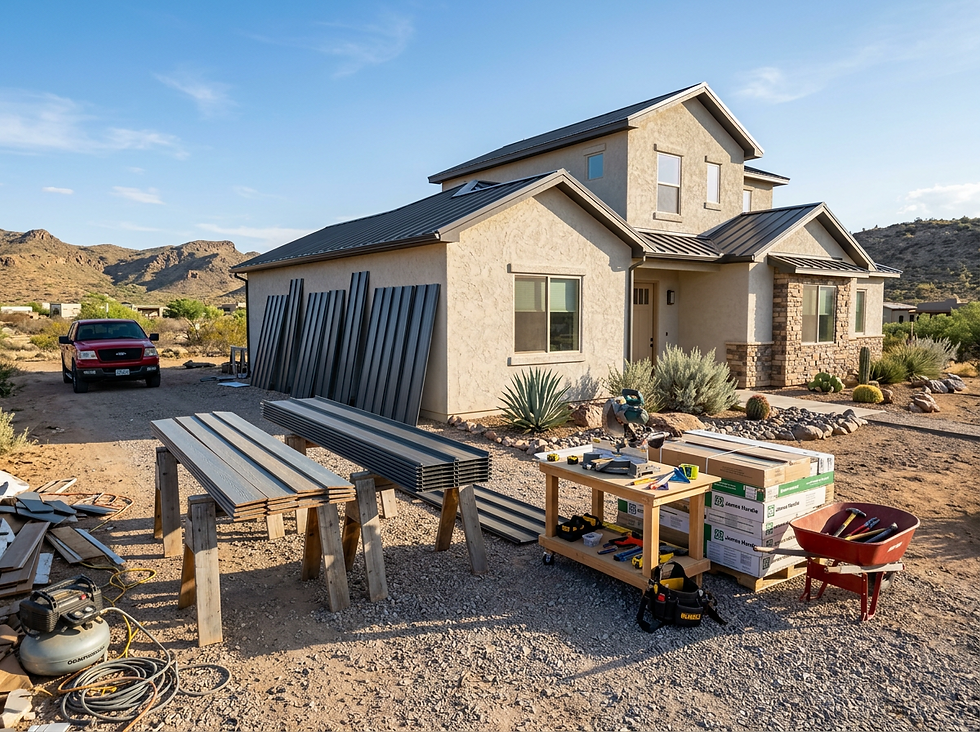
Tucson Roofing Costs in 2026 Tile Underlayment Shingle Flat Roof and Restoration Prices
Roof pricing in Tucson can surprise people for a simple reason: the roof does more than shed rain. It takes months of UV exposure, extreme summer heat, sudden monsoon storms, windblown dust, and big temperature swings. A roof that looks fine from the ground can still need new underlayment, recoating, repairs, or full replacement.
For 2026, most Tucson roofing projects fall into four common categories:
Tile underlayment replacement
Shingle roof installation
Flat roof installation
Roof restoration or coating
The right budget depends on roof size, slope, access, tear-off needs, material choice, labor availability, and how much hidden damage shows up once work begins. The ranges below are planning estimates for Tucson homeowners, not fixed bids. A site inspection is still the only way to price a specific roof accurately.

What Tucson homeowners should expect from roofing prices in 2026
Roofing costs in Tucson tend to sit in a middle ground compared with many large U.S. metro areas. The materials are widely available, and many local crews understand desert roofing systems well. At the same time, heat, labor demand, insurance requirements, and material movement across the Southwest can push prices higher.
A basic asphalt shingle roof will usually cost less than a tile system. A flat roof may look simple, but the quality of the waterproofing system matters a lot. Tile roofs often last a long time, but the underlayment beneath the tile can fail long before the tile itself wears out.
Here is a broad planning snapshot for 2026:
Roofing project | Typical Tucson planning range | Best fit |
Tile underlayment replacement | $8,000 to $25,000+ | Existing tile roof with aging waterproof layer |
Asphalt shingle installation | $7,500 to $18,000+ | Sloped roofs where cost and speed matter |
Flat roof installation | $9,000 to $28,000+ | Low-slope homes, additions, patios, and modern rooflines |
Roof restoration or coating | $2,500 to $12,000+ | Roofs with serviceable structure and limited damage |
Larger homes, two-story properties, steep slopes, complicated valleys, skylights, parapet walls, and heavy tear-off work can push costs beyond these ranges. Smaller sections, simple rooflines, or maintenance coatings may come in lower.
The most useful roofing estimate is not just a total price. It should explain the system being installed, the prep work included, and what happens if damaged decking or fascia is found.
Why Tucson roofing costs are different from wetter climates
A roof in Tucson faces a different set of problems than one in Seattle, Denver, or the Midwest. Rainfall is lower overall, but water can arrive quickly during monsoon season. Roofs need to handle sudden drainage demands after long dry periods.
The desert climate also makes material selection more important.
Heat and UV exposure shorten the life of surface materials
Tucson’s sun is hard on asphalt, coatings, sealants, plastic vents, and exposed roof membranes. UV exposure dries out materials, causes cracking, and speeds up aging. This is one reason cheap repairs often fail quickly when they rely on low-grade sealants.
Reflective coatings, higher-quality membranes, proper flashing, and good ventilation can raise the upfront price, but they often reduce trouble later.
Monsoon storms test flashing and drainage
Many leaks show up during monsoon season because wind-driven rain can enter weak points that stay dry most of the year. Valleys, roof-to-wall transitions, skylights, scuppers, parapet walls, and flat roof drains deserve close attention.
A lower bid may leave these details vague. A stronger bid will name the flashing approach, underlayment type, coating system, or membrane details.
Labor conditions affect scheduling and pricing
Roofing crews work in extreme conditions during the summer. Heat safety, shorter work windows, and high seasonal demand can affect schedules. After storm periods, roofing companies often receive more repair requests, which can also affect lead times.
A homeowner planning ahead usually has more choices than someone trying to book emergency work after a leak.
Tile underlayment replacement costs in Tucson
Tile roofs are common across Tucson, especially on stucco homes with Southwestern or Mediterranean styling. The tile itself can last for decades. The underlayment beneath it usually does not last as long.
That underlayment is the waterproof barrier. When it dries out, cracks, tears, or fails at penetrations, water can reach decking even if the tiles look intact.
Typical 2026 cost range for tile underlayment replacement
For a typical Tucson home, tile underlayment replacement often lands between $8,000 and $25,000+. Larger or more complex tile roofs can cost more.
A useful way to think about pricing is by roof size and difficulty:
Tile underlayment project type | Planning range |
Small, simple tile roof section | $4,000 to $9,000 |
Average single-story home | $10,000 to $18,000 |
Larger home or complex tile roof | $18,000 to $30,000+ |
This work is labor-heavy. Crews must remove the existing tiles, stack or stage them, remove old underlayment, inspect decking, install new underlayment, replace broken tiles, redo flashings where needed, and reinstall the tile.
What is included in a quality underlayment replacement
A proper tile underlayment job is not just “paper replacement.” It often includes:
Carefully lifting and stacking reusable roof tiles
Removing old felt or synthetic underlayment
Checking plywood or plank decking for rot or water damage
Replacing broken tiles
Installing new underlayment suited for high heat
Reworking valleys and roof penetrations
Replacing or improving flashing where needed
Resetting tiles and securing them correctly
Underlayment options matter. Traditional felt may cost less upfront, while higher-grade synthetic or self-adhered products usually cost more. In Tucson’s heat, better materials can be worth discussing because the roof assembly gets extremely hot.
Why quotes can vary so much
Tile underlayment quotes vary because contractors may include different levels of work. One estimate may include new flashings, tile replacement allowance, and decking repair pricing. Another may include only basic underlayment replacement.
Common cost drivers include:
Tile type and fragility
Concrete and clay tiles can break during removal or handling. Older or discontinued tiles may be harder to match.
Roof pitch and access
Steeper roofs take longer and require more safety setup. Tight side yards and limited driveway access can also slow the job.
Decking repairs
Water-damaged decking can add cost. The true amount may not be visible until the old underlayment comes off.
Valleys, chimneys, skylights, and walls
More transitions mean more flashing work.
Tile underlayment replacement is often the best choice when the tile field still has useful life, but the waterproof layer beneath it has aged out.

Shingle installation prices in Tucson
Asphalt shingles are popular because they are familiar, relatively affordable, and fast to install. For many pitched roofs, shingles offer a practical balance of price and performance.
In 2026, the new roof cost for asphalt shingles in Tucson will usually depend on the shingle grade, tear-off needs, roof shape, ventilation, and any wood repairs.
Typical 2026 cost range for shingle roofing
A full shingle installation on a Tucson home often falls between $7,500 and $18,000+. Smaller or simpler roofs may cost less. Larger homes, steep roofs, multiple layers, and major decking repairs can cost more.
Shingle project type | Planning range |
Small shingle roof or detached structure | $4,500 to $8,500 |
Average single-story home | $8,000 to $14,000 |
Larger or more complex home | $14,000 to $22,000+ |
These ranges assume normal residential conditions. Premium shingles, upgraded ventilation, specialty colors, or extra tear-off labor may raise the total.
Basic shingles versus architectural shingles
Three-tab shingles are usually the lower-cost option, but many homeowners now choose architectural shingles. Architectural shingles are thicker, have a more dimensional look, and often come with stronger manufacturer warranty options.
The price difference may be modest compared with the total project cost, especially when labor is the largest part of the job. If the roof is already being replaced, upgrading from an entry-level shingle can make sense.
What a shingle installation should include
A solid shingle estimate should spell out more than the shingle brand and color. Look for details such as:
Tear-off and disposal
Decking inspection
Replacement cost for damaged sheathing
Underlayment type
Drip edge and metal flashing
Starter shingles
Ridge caps
Pipe jack and vent treatment
Ventilation improvements
Workmanship warranty
Ventilation deserves attention in Tucson. A poorly ventilated attic can trap heat, which can age shingles faster and increase indoor comfort problems. Ridge vents, off-ridge vents, soffit intake, and other options should match the home’s design.
When shingles make the most financial sense
Shingles are usually a good fit when:
The roof has a standard slope
The home does not require tile for HOA or design reasons
Budget is a key concern
The roofline is simple
Fast installation matters
The homeowner wants a clean, familiar look
Shingles may be less ideal for very low-slope roof sections. Low-slope areas usually need a flat roofing system rather than standard shingles.
Flat roof installation costs in Tucson
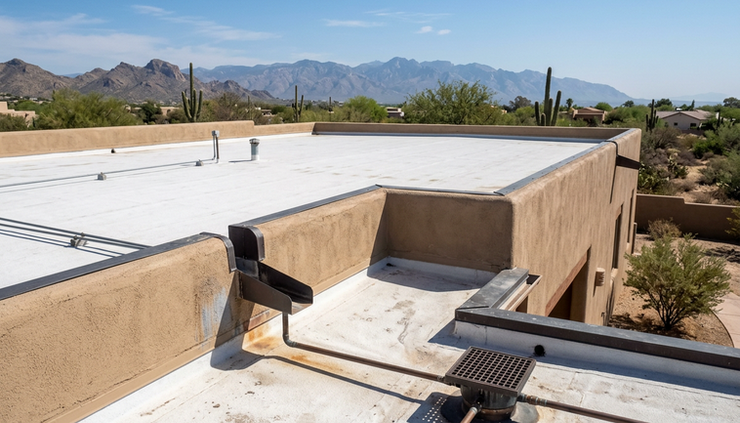
Flat and low-slope roofs are common in Tucson. Many homes have entire flat roofs, while others have flat patio covers, additions, garages, or low-slope sections connected to pitched tile or shingle areas.
Flat roofs need careful waterproofing because water drains more slowly. Even a small installation mistake can create ponding, blistering, or leaks.
Typical 2026 cost range for flat roof installation
For 2026, flat roof installation in Tucson often ranges from $9,000 to $28,000+ for full residential projects. Smaller roof sections or patio covers may cost less. Large homes, damaged decking, poor drainage, and parapet work can increase the price.
Flat roof project type | Planning range |
Small flat section or patio roof | $3,500 to $8,000 |
Average residential flat roof | $10,000 to $20,000 |
Large or complex flat roof | $20,000 to $35,000+ |
Flat roof pricing depends heavily on the system. Common options may include built-up roofing, modified bitumen, single-ply membranes, foam roofing with coating, or coating systems over a suitable existing roof.
Foam roofing and coating systems
Spray polyurethane foam roofing is common in Arizona because it can create a seamless insulated layer when installed correctly. It is usually coated to protect the foam from UV exposure.
Foam roof costs vary based on thickness, prep work, existing roof condition, coating type, and edge details. The system can perform well, but it needs maintenance. The protective coating must be inspected and renewed on schedule.
A foam system may be a good fit when insulation value, seamless coverage, and drainage correction are part of the goal.
Modified bitumen and membrane systems
Modified bitumen and other membrane systems can work well on low-slope roofs. They rely on proper seams, flashing, termination points, and drainage. These details matter more than the product name alone.
Homes with parapet walls need special attention. Water can collect at wall transitions, scuppers, or drains. A good flat roof proposal should describe how these areas will be handled.
Why drainage affects the price
Flat roofs are not truly flat. They need enough slope to move water toward drains, scuppers, or edges. When water sits too long, roof materials age faster.
Fixing drainage may require:
Adding tapered insulation
Building up low areas
Improving scuppers
Reworking drains
Adjusting cricket areas near walls or equipment
Repairing sagging roof decking
These upgrades raise the upfront cost, but they can reduce repeat leaks and coating failures.
Roof restoration costs in Tucson
Roof restoration can be a smart middle path when the roof is aging but still structurally sound. It usually costs less than full replacement, creates less waste, and can extend service life when done at the right time.
Restoration is not a cure for every roof. If the roof has widespread rot, saturated insulation, failing decking, serious structural issues, or major underlayment failure, replacement may be the better choice.
Typical 2026 cost range for restoration
In Tucson, roof restoration often ranges from $2,500 to $12,000+. The lower end may cover small coating or repair work. The higher end may include cleaning, repairs, sealing, reinforcement, and a full coating system on a larger roof.
Restoration project type | Planning range |
Minor repairs and maintenance coating | $1,500 to $4,500 |
Average flat roof recoating | $4,000 to $9,000 |
Larger restoration with repairs | $9,000 to $15,000+ |
Restoration pricing depends on roof condition. A roof that only needs cleaning and coating will cost far less than one with open seams, blisters, cracked penetrations, ponding areas, and damaged edges.
What restoration usually includes
A restoration project may include:
Roof inspection
Cleaning and removal of loose material
Minor leak repairs
Seam reinforcement
Flashing repairs
Crack and penetration sealing
Primer when needed
Elastomeric or reflective coating
Final inspection
For flat roofs, coatings can help protect against UV exposure and reduce surface temperature. The coating must be applied at the correct thickness over a compatible surface. Thin coating may look fresh for a short time but fail early.
When restoration is a good choice
Restoration may make sense when:
The roof is not leaking widely
The deck is sound
Existing material still has good adhesion
Drainage problems are minor or fixable
The goal is to extend service life
The budget does not support a full replacement yet
Restoration is usually less attractive when leaks have been ignored for years or when water has already damaged the structure under the surface.
The biggest factors that influence Tucson roofing prices
Two homes with the same square footage can have very different roofing costs. The roof’s shape, age, access, and hidden conditions matter as much as the material.
Materials and product grade
Material cost includes more than the visible roof covering. A complete roof system may require underlayment, fasteners, flashing, sealants, vents, ridge caps, coatings, insulation, drip edge, and disposal materials.
Higher-grade materials usually raise the bid, but they can also reduce risk. In Tucson, heat tolerance and UV resistance deserve special attention.
Labor and crew skill
Labor is often one of the largest parts of a roofing project. Tile underlayment replacement takes careful handling. Flat roofing requires detail work at seams, penetrations, and drainage points. Shingle roofing still requires proper layout, ventilation, and flashing.
The cheapest labor can become expensive if the roof leaks after the first monsoon storm.
Tear-off, disposal, and access
Removing old roofing adds labor and disposal fees. Multiple shingle layers, brittle tile, heavy debris, or limited property access can increase the price.
Access can be a quiet cost driver. A home with easy driveway staging and simple roof access is faster to work on than a home with tight side yards, landscaping, pools, or limited parking.
Roof shape and complexity
Simple roofs cost less per square foot. Complex roofs take longer because they have more cuts, transitions, and flashing points.
Cost-raising features include:
Multiple valleys
Skylights
Chimneys
Dormers
Parapet walls
HVAC equipment
Solar equipment
Steep slopes
Mixed flat and pitched sections
Solar panels deserve special planning. Removing and reinstalling panels can add cost and require coordination with a solar contractor.
Local market trends for 2026
Several local trends may shape Tucson pricing in 2026.
Demand for heat-resistant systems is growing. Many homeowners are paying more attention to reflective coatings, ventilation, and materials that withstand long UV exposure.
Insurance and code requirements affect bids. Licensed roofing contractors carry insurance and follow safety rules. Those costs show up in legitimate estimates.
Storm timing affects availability. After monsoon damage, repair demand rises. Scheduling before peak leak season can help avoid rushed decisions.
Material transportation still matters. Roofing products move through regional supply networks. Fuel, freight, and inventory levels can affect final pricing.
Skilled labor remains valuable. Experienced crews who know tile, foam, coatings, and flat roof details are in demand.

How to compare Tucson roofing estimates
A roofing estimate should make the scope clear. If one bid is much lower than the others, compare the details before assuming it is the best value.
Look for these items:
Material brand or system type
Underlayment or coating details
Tear-off scope
Flashing work
Ventilation plan
Decking repair pricing
Tile replacement allowance
Warranty terms
Permit handling when needed
Cleanup and disposal
Payment schedule
Ask how the contractor handles hidden damage. A clear per-sheet decking replacement cost, for example, can prevent confusion later.
It also helps to ask what is excluded. Some estimates do not include solar panel removal, severe wood damage, fascia replacement, or HVAC-related roof work.
Which roofing option gives the best value
The best value depends on the roof you already have and how long you plan to stay in the home.
Roofing need | Usually the best path |
Tile looks good but leaks are appearing | Tile underlayment replacement |
Old shingle roof is curling or losing granules | Shingle replacement |
Low-slope roof has recurring leaks | Flat roof replacement or restoration after inspection |
Flat roof is sound but weathered | Restoration or recoating |
Roof has widespread water damage | Full replacement |
Tile underlayment replacement often gives strong value because it preserves the existing tile while renewing the waterproof layer. Shingles often win on upfront affordability. Flat roof systems need careful design, but a well-installed system can handle Tucson’s climate well. Restoration can be cost-effective when the roof is still a good candidate.
For a more specific breakdown of local pricing, compare project types in this Tucson roofing cost guide.

Frequently asked questions about Tucson roofing costs
How much does tile underlayment replacement cost in Tucson in 2026?
Many Tucson tile underlayment projects fall between $8,000 and $25,000+. The final price depends on roof size, tile condition, access, flashing details, and any damaged decking found after tile removal.
Is a flat roof cheaper than a shingle roof?
Not always. A flat roof can cost more than shingles because it needs a continuous waterproofing system, careful flashing, and proper drainage. Small flat sections may be affordable, but large or complex flat roofs can become expensive.
How often should a flat roof be recoated in Tucson?
The schedule depends on the coating type, roof condition, sun exposure, and installer recommendations. Many coated flat roofs need regular inspections and periodic recoating to protect the surface from UV damage.
Can roof restoration stop leaks?
Restoration can stop leaks when the roof is structurally sound and the leak sources are repairable. It is not a good fix for roofs with widespread trapped moisture, rotten decking, or major system failure.
Why are Tucson roofing estimates so different from one contractor to another?
Estimates vary because contractors may include different materials, warranties, tear-off work, flashing repairs, underlayment types, coating thicknesses, and decking repair allowances. Compare the written scope, not just the total price.
The practical takeaway for 2026 roofing budgets
Tucson roofing costs in 2026 will depend on the system, the condition of the existing roof, and the quality of the work behind the visible surface. Shingles are often the lowest-cost full replacement option. Tile underlayment replacement is common when the tile still has life left. Flat roofs need strong waterproofing and drainage. Restoration can save money when the roof is still a good candidate.
The smartest next step is to match the project to the roof’s actual condition. A clear inspection, a detailed written scope, and a contractor who explains the system can prevent expensive surprises once the work begins.