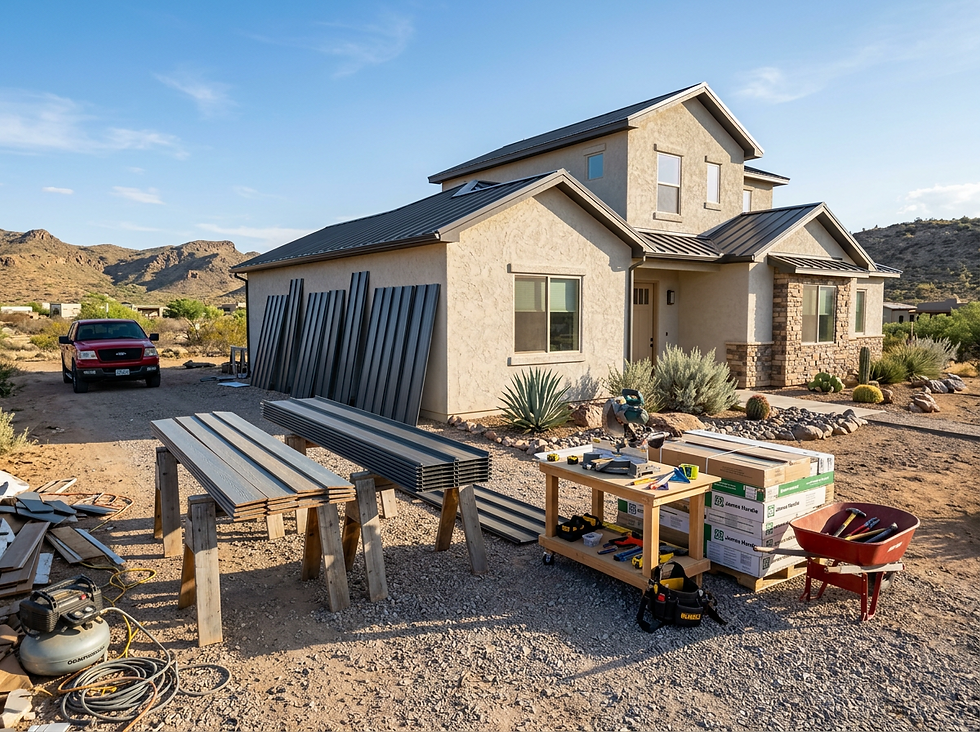
Roof Repair Restore or Replace in Tucson AZ How to Choose the Best Option
A roof in Tucson works harder than many homeowners realize. It faces long stretches of intense sun, sudden monsoon downpours, blowing dust, wide temperature swings, and the occasional hailstorm. Small weaknesses can turn into leaks fast, but replacing a roof too early can waste thousands of dollars.
The right choice usually comes down to three paths: repair, restore, or replace. Each one can be the smart move in the right situation. The goal is to match the work to the roof’s real condition, not just the most urgent symptom.
This guide walks through how each option works, what it tends to cost compared with the others, how Tucson’s climate affects the decision, and when a professional inspection is worth it.

Tucson roofs have their own set of challenges
Roofing decisions in Tucson are not the same as roofing decisions in cooler or wetter parts of the country. The desert climate creates specific wear patterns, especially on flat and low-slope roofs.
The biggest local factors include:
Strong UV exposure
Tucson sun can dry out roofing materials, fade protective coatings, and cause surfaces to become brittle over time.
Heat expansion and contraction
Roofing materials expand during hot days and contract as temperatures drop. Over time, this movement can open seams, loosen flashing, and widen small cracks.
Monsoon storms
Heavy rain can test roof drains, scuppers, seams, valleys, and flashing. A roof that seems fine during light rain may leak during a summer storm.
Blowing dust and debris
Dust, leaves, and desert debris can collect around drains and low spots. On flat roofs, that can lead to ponding water.
Occasional hail and high winds
Storms can crack tiles, loosen shingles, damage coatings, or expose weak areas that were already aging.
Tucson also has a mix of roofing types. Many homes have flat or low-slope roofs, often with built-up roofing, modified bitumen, foam, or coating systems. Others have tile roofs, asphalt shingles, metal roofing, or a combination of sloped and flat sections.
That mix matters because a roof that looks “old” may still be a good candidate for restoration, while a newer roof with poor installation may need more serious work than expected.
Start by identifying what the roof actually needs
Before comparing repair, restoration, and replacement, it helps to separate symptoms from causes.
A stain on the ceiling may look like a simple leak, but the source could be cracked flashing, a clogged drain, an open seam, broken tile underlayment, or a failed roof penetration. By the same token, a roof that looks faded may still be watertight and structurally sound.
A basic roof assessment should look at five things.
Look at the age of the roof
Age does not decide everything, but it gives useful context.
A relatively young roof with one damaged area may only need repair. A roof near the end of its expected service life may not be worth repeated patching. A roof in the middle of its life, with sound structure but worn surface protection, may be a strong candidate for restoration.
Try to find:
The year the roof was installed
Any warranty paperwork
Records of past repairs
Notes about previous coatings or overlays
Inspection reports from home purchases or insurance claims
If there is no paperwork, a roofing professional can often estimate the roof’s condition based on materials, wear, and installation details.
Check for active leaks and water damage
Inside the home, look for signs such as:
Brown or yellow ceiling stains
Bubbling paint
Damp drywall
Musty odors after rain
Soft spots near skylights or vents
Water marks around exterior walls
Outside, look for:
Cracked or missing tiles
Lifted shingles
Open seams
Damaged flashing
Exposed foam or underlayment
Blisters, splits, or worn coating
Ponding water that remains after rain
One leak does not always mean the whole roof has failed. Several leaks in different areas tell a different story.
Pay attention to flat roof drainage
Drainage is one of the biggest roof health issues in Tucson, especially on flat roofs.
Flat roofs are not perfectly flat. They need enough slope to send water toward drains, scuppers, or edges. When water sits for too long, it speeds up surface wear and can find weak seams or cracks.
After a rain, check from the ground where possible. Avoid climbing onto a wet roof. If standing water remains in the same spots, that is a sign the roof needs attention.
Small drainage issues may be corrected during repair or restoration. Serious slope problems may require more extensive work.
Inspect roof edges and penetrations
Many leaks start where the roof is interrupted.
Common weak points include:
HVAC curbs
Plumbing vents
Skylights
Chimneys
Parapet walls
Roof drains
Scuppers
Satellite mounts
Solar attachments
In Tucson, rooftop HVAC units are common, and the flashing around curbs deserves special attention. A roof field may be in decent shape while the details around equipment are failing.
Consider the full roof system
A roof is more than the top layer. It includes surface material, underlayment, decking, insulation, flashing, drainage, and ventilation.
Repairing the visible surface will not solve deeper problems such as rotten decking, trapped moisture, poor slope, or failing underlayment beneath tile. This is where a professional opinion can save money. The best-looking patch is still a bad investment if the layers below it are compromised.
Roof repair is best for isolated problems
Roof repair focuses on fixing specific damaged areas rather than treating the entire roof. It is often the fastest and least expensive option when the roof is otherwise in good condition.
Common repairs in Tucson include sealing small cracks, fixing flashing, replacing broken tiles, patching damaged flat roof areas, resealing penetrations, correcting minor storm damage, and clearing or repairing drainage points.

When repair makes sense
Repair is usually the best choice when:
The roof is fairly new or in the middle of its service life
Damage is limited to one or two areas
The roof has not had repeated leaks
The underlying structure appears sound
Most of the surface is still performing well
The problem has a clear cause
For example, if a few clay tiles cracked during a storm but the underlayment is still in good shape, replacing those tiles may be enough. If a flat roof has one open seam near a vent, a targeted repair may stop the leak.
Pros of repairing a roof
Lower upfront cost
Repair usually costs less than restoration or replacement because it uses fewer materials and less labor.
Faster completion
Many repairs can be completed quickly once the problem is diagnosed, especially if materials are available.
Less disruption
Repair work often affects only a small area of the home.
Good for extending useful life
A timely repair can add years to a roof that is otherwise performing well.
Cons of repairing a roof
Repairs can miss larger issues
A patch may stop one leak but leave other weak spots untouched.
Repeated repairs add up
If the same roof needs service after every monsoon season, the total cost can begin to approach restoration or replacement.
A repair may not improve energy performance
A spot repair does not refresh the whole surface or improve reflectivity across the roof.
Warranties may be limited
Repair warranties are usually narrower than warranties for full roof systems or larger restoration work.
Repair works best as a targeted solution
The key question is whether the problem is isolated. If it is, repair is practical. If the roof has widespread wear, multiple leaks, or a failing surface, repair may only delay the real decision.
A helpful rule of thumb is simple: if the roof keeps telling the same story in different places, the issue is no longer isolated.
Roof restoration can extend life without full replacement
Roof restoration sits between repair and replacement. Instead of removing and replacing the entire roof system, restoration renews the existing roof so it can keep performing.
On flat and low-slope roofs in Tucson, restoration may include cleaning, repairing cracks and seams, reinforcing weak areas, improving drainage details, and applying a protective coating. Many homeowners research roof coating tucson options because reflective coatings can help protect against UV exposure and surface wear.
Restoration is not just painting the roof. A durable restoration depends on preparation, repairs, compatible materials, and proper application.
When restoration makes sense
Restoration may be the right choice when:
The roof has general surface wear but is not structurally failed
Leaks are limited or can be repaired before coating
The roof has good adhesion and a stable substrate
Moisture is not trapped beneath the surface
Drainage is acceptable or can be improved
The homeowner wants to extend roof life without full replacement
This is common for flat roofs that have weathered under the Tucson sun but still have a sound base. It can also apply to some foam roof systems when the foam is intact but the protective coating has worn thin.
Pros of restoring a roof
Lower cost than replacement
Restoration usually costs less than tearing off and installing a new roof.
Less waste
Because much of the existing system remains in place, restoration sends less material to the landfill.
Improved surface protection
Coatings can shield the roof from sun exposure and help slow future wear.
Potential energy benefits
Reflective roof surfaces can reduce heat absorption. This may help indoor comfort, especially on low-slope roofs exposed to full sun.
Less disruption
Restoration is usually less invasive than replacement.
Cons of restoring a roof
Not every roof qualifies
If the deck is soft, moisture is trapped, seams are failing throughout, or the roof has major slope problems, restoration may not solve the problem.
Preparation matters
A coating applied over dirt, loose material, wet areas, or failed repairs may not last.
It does not reset the entire roof system
Restoration improves and protects the current roof, but it does not replace all components.
Drainage problems may remain
Coatings can help protect surfaces, but they do not magically fix poor slope.
Restoration depends on proper inspection
A good restoration starts with a careful inspection. The contractor should identify wet areas, adhesion problems, failed seams, cracks, blisters, and drainage issues before recommending a coating system.
For flat and low-slope roofs, working with a qualified flat roof contractor is especially important. These roof types need the right materials, thickness, detailing, and drainage plan. A product that works on one roof may fail on another if the surface is not compatible.

Roof replacement is the right choice when the system has reached its limit
Roof replacement removes the old roofing material and installs a new system. It is the most expensive path, but it is also the most complete solution when repairs or restoration would only postpone failure.
Replacement may involve removing shingles, tile underlayment, flat roof membranes, old coatings, foam roofing, or built-up layers. The exact process depends on the existing roof type and local code limits on roof layers.
When replacement makes sense
Replacement is usually the best option when:
The roof has widespread leaks
The decking is damaged or soft
The roof has trapped moisture
Large areas of material are brittle, loose, or failing
The roof has been repaired many times
The underlayment beneath tile has reached the end of its life
A restoration would not bond properly
The roof has serious drainage or installation defects
The homeowner plans to stay in the home long-term and wants a reset
Tile roofs are a good example. The tiles themselves may last a long time, but the underlayment beneath them can wear out. If leaks come from failing underlayment across the roof, replacing a few tiles will not fix the real issue.
Pros of replacing a roof
Most complete solution
Replacement addresses the roof system as a whole, not just the visible surface.
Better long-term reliability
A properly installed new roof can reduce the cycle of recurring leaks and emergency repairs.
Opportunity to correct past problems
Replacement allows contractors to improve flashing, drainage, ventilation, underlayment, and roof details.
Stronger warranty options
New roof systems often come with broader material and workmanship warranty choices.
Better fit for major home plans
If solar installation, remodeling, or long-term ownership is in the plan, replacement may be the more practical foundation.
Cons of replacing a roof
Highest upfront cost
Replacement requires more labor, more materials, and often tear-off and disposal.
More disruption
The project may take longer and create more noise and activity around the home.
Not always necessary
Replacing a roof that could be restored or repaired may waste money.
Material choices matter
The wrong system for the slope, home design, or climate can create future problems.
Replacement should solve the original cause
A new roof should not just cover old symptoms. It should correct the reasons the previous roof failed.
That may include improving drainage, replacing damaged decking, upgrading flashing, using better underlayment, or choosing a material better suited to Tucson’s heat and sun. A replacement that repeats the same weak details may create the same future leaks.
Compare repair, restoration, and replacement side by side
The best option is easier to see when the three choices are compared directly.
Option | Best fit | Main advantage | Main drawback |
Repair | Isolated damage on an otherwise healthy roof | Lowest upfront cost | May not address wider wear |
Restoration | Worn but stable roof with sound structure | Extends life without full tear-off | Requires a roof that qualifies |
Replacement | Failed, leaking, or aging roof system | Most complete long-term fix | Highest upfront cost |
Cost matters, but the cheapest option is not always the least expensive over time. A low-cost repair on a failing roof can become a repeat expense. A full replacement on a restorable roof can be unnecessary. The best value is the option that solves the current problem for the right length of time.
Cost should be measured against remaining roof life
Roofing costs vary based on roof size, slope, access, material, damage, labor, and how much preparation is needed. Instead of focusing only on the lowest price, compare cost with expected benefit.
Ask this question:
How much useful roof life does this option realistically buy?
A repair may be a smart choice if it buys several more years on a roof that is mostly sound. A restoration may be smart if it delays replacement while improving surface protection. Replacement may be the better value if repairs would only buy a short break before the next leak.
Think in terms of risk
A leaking roof can damage insulation, drywall, flooring, electrical components, and personal belongings. It can also disrupt daily life during monsoon season.
That does not mean every roof needs replacement at the first sign of trouble. It means the decision should include the risk of waiting.
High-risk signs include:
Leaks near electrical fixtures
Repeated leaks in multiple rooms
Sagging ceiling areas
Soft roof decking
Large areas of ponding water
Moldy or musty smells after rain
Visible daylight through attic or roof openings
When these signs appear, a quick patch may not be enough.
Tucson climate can push the decision one way or another
Local climate does not just affect roof wear. It affects timing and material choice.
Before monsoon season is a smart time to inspect
Tucson’s summer storms can expose weak roof details quickly. It is wise to inspect the roof before monsoon season so repairs or restoration can happen before heavy rain arrives.
Waiting until the first major storm often means dealing with emergency calls, interior damage, and longer scheduling delays.
Heat affects materials and scheduling
Some roofing materials and coatings must be applied within certain temperature ranges and surface conditions. Extreme heat can affect drying, adhesion, and worker safety.
A reputable contractor will plan around weather, roof surface temperature, and product requirements. Faster is not always better if the conditions are wrong.
Reflective surfaces can help protect flat roofs
White or light-colored roof coatings can reduce heat absorption on flat and low-slope roofs. That can help protect the roof surface from sun damage and may support indoor comfort.
The coating still needs proper thickness, good adhesion, and sound repairs underneath. Reflectivity alone does not fix cracks, wet insulation, or failing seams.
Dust and debris should not be ignored
Dust can reduce coating adhesion if the roof is not cleaned correctly. Debris can also block drainage.
A restoration or repair should include surface cleaning and attention to drains, scuppers, and gutters where applicable. Skipping this step can shorten the life of the work.
How to assess the roof before calling a contractor
A homeowner can do a useful first check without climbing onto the roof. Safety comes first. Many roof surfaces are slippery, fragile, or easy to damage.
Start with a ground-level and interior review.
Walk the perimeter after dry weather
From the ground, look for:
Missing or shifted tiles
Loose roof-edge metal
Sagging areas
Stains on exterior walls
Debris buildup
Damaged gutters or scuppers
Tree branches touching the roof
Use binoculars if needed. Avoid walking on tile roofs, since tiles can crack under foot traffic.
Check the home after rain
After a storm, inspect ceilings, closets, attic access areas, and rooms near roof penetrations.
Look for new stains, damp smells, or bubbling paint. Take photos and note the date. If the stain grows after each rain, that helps a contractor trace the problem.
Review past repair patterns
A roof that needs a different patch every year may be nearing the end of its practical life. Look at receipts or notes from past work.
Ask:
Was the same area repaired more than once?
Did leaks return after storms?
Were repairs made only after emergencies?
Has the roof ever had a full inspection?
Has the roof been coated before?
Past patterns often reveal whether the roof has an isolated issue or a system-wide problem.
Watch for signs of coating failure
On flat roofs, coating wear can show up as:
Chalky residue
Thin or bare spots
Cracking
Peeling
Blisters
Exposed foam
Dark patches
Seams showing through
Some of these issues are repairable. Others may signal that the roof needs a full restoration or replacement.
When to consult a professional
A professional inspection is worth scheduling when the answer is not obvious, the roof has leaked, or the roof is due for maintenance. It is also wise before buying or selling a home, installing solar panels, or planning a major remodel.
Call a roofing professional if:
There is an active leak
The roof has multiple problem areas
Water ponds after rain
The roof is older and has no service records
Interior stains keep returning
A coating is peeling or blistering
Tile underlayment may be failing
Storm damage is visible
The roof feels soft or unsafe
The repair history is getting expensive
A good inspection should produce clear findings, not pressure. The contractor should explain the roof’s condition, show photos when possible, and describe why repair, restoration, or replacement makes sense.
Questions to ask during the inspection
It helps to ask direct questions.
What is the source of the leak or damage?
Is the problem isolated or widespread?
Is the roof structure sound?
Are there signs of trapped moisture?
How is the drainage performing?
Can the roof be restored, or is replacement the safer choice?
What materials do you recommend for Tucson’s climate?
What preparation is included?
What warranty applies to labor and materials?
What maintenance will the roof need after the work?
The best answer is not always the most expensive one. It is the one that matches the roof’s condition and gives a clear reason.

How to choose the best option with confidence
The decision becomes clearer when the roof is judged by condition, not guesswork.
Choose repair when the damage is limited, the roof is otherwise healthy, and the fix addresses a clear cause.
Choose restoration when the roof surface is worn but stable, the structure is sound, and a full protective system can extend its service life.
Choose replacement when the roof has widespread failure, hidden moisture, structural damage, aging underlayment, or a history of repeated leaks.
For Tucson homes, the most common mistake is waiting until monsoon season exposes a problem. The second most common mistake is choosing a quick patch when the roof needs broader work. A careful inspection before storm season can help avoid both.
For a local evaluation of materials, roof condition, and Tucson-specific options, visit this Tucson roofing resource to learn more about repair, restoration, and replacement choices.
Frequently asked questions
Is roof repair enough if there is only one leak?
Often, yes. If the roof is otherwise in good condition and the leak has a clear source, a targeted repair may be enough. If there are multiple leaks or recurring stains, the roof may need restoration or replacement.
How do I know if my flat roof can be restored?
A flat roof may be restorable if the surface is stable, dry, well-adhered, and structurally sound. A contractor should check for trapped moisture, failed seams, ponding water, and compatibility before recommending coating or restoration.
Is roof replacement always better than restoration?
No. Replacement is more complete, but it is not always necessary. Restoration can be a smart choice when the existing roof is still sound and mainly needs renewed protection.
When is the best time to inspect a roof in Tucson?
Before monsoon season is ideal. Spring and early summer inspections can catch cracked tiles, worn coating, drainage issues, and flashing problems before heavy rain arrives.
Can roof coating stop all leaks?
No. Coating can protect and extend the life of a qualified roof, but it should not be used as a shortcut over serious damage. Cracks, seams, penetrations, wet areas, and drainage problems need proper repair first.
The right roofing choice protects more than the roof
A good roofing decision balances cost, condition, climate, and timing. Repair solves isolated problems. Restoration can extend the life of a roof that still has a solid base. Replacement gives the home a fresh start when the system has reached its limit.
The best next step is a careful assessment. Look for warning signs, review the roof’s history, and get a professional opinion when leaks, wear, or uncertainty show up. In Tucson’s sun and monsoon weather, a roof that gets the right treatment at the right time will protect the home far better than one that gets the fastest fix.