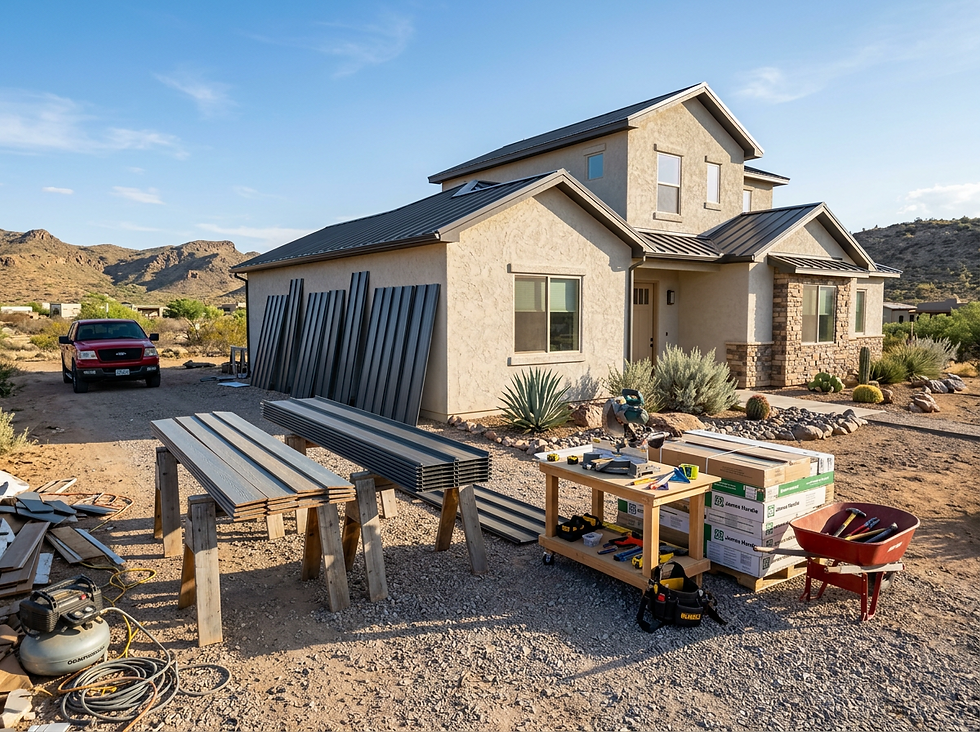
Metal vs Fiber Cement Siding for Tucson Homes Which Premium Option Fits Your Needs
Tucson is beautiful, but it is not gentle on a home’s exterior. Intense sun, wide temperature swings, summer monsoon storms, dust, and dry desert air all test siding in different ways. A product that looks great in a cooler, wetter region may age very differently in Southern Arizona.
Two premium options often rise to the top: metal panels and fiber cement boards or planks. Both can deliver a sharper, longer-lasting exterior than many basic siding choices. Both also come with tradeoffs. The right fit depends on the style of the home, how much upkeep feels reasonable, and what kind of wear matters most.

Tucson’s climate changes the siding conversation
In many parts of the country, siding decisions center on rain, snow, humidity, and freeze-thaw cycles. Tucson has a different set of pressures.
The biggest factor is UV exposure. Long sunny seasons can fade coatings, dry out caulk, and make lower-quality finishes look tired sooner. Dark colors absorb more heat, which can increase expansion, fading, or surface stress depending on the material.
Heat also matters. Exterior surfaces can get much hotter than the air temperature, especially on south- and west-facing walls. Materials expand and contract through the day, and good installation must allow for that movement.
Then come the monsoons. Tucson may be dry most of the year, but heavy summer storms can drive water against walls in short, intense bursts. Wind can push dust and grit into seams. Occasional hail and flying debris can leave visible damage on some surfaces.
Because of that, premium siding in Tucson needs to do three things well:
Stand up to sun and heat
Shed water during short, intense storms
Keep its appearance with realistic maintenance
How metal siding performs in the desert
Metal siding can be a strong fit for Tucson homes that lean modern, contemporary, industrial, or desert minimalist. It is commonly made from steel or aluminum panels with protective coatings. The look can range from sleek vertical panels to textured finishes that mimic wood grain.
Its biggest strength is durability. Quality metal products resist rot, termites, and warping. They do not absorb water like wood, and they can handle dry desert conditions well when the coating and installation are right.
Metal also handles fire exposure better than many combustible materials, which can be a meaningful factor in dry regions and desert-edge neighborhoods. It will not feed flames the way wood can.
The maintenance picture is appealing, too. Most homeowners can keep panels looking clean with occasional rinsing and gentle washing. There is no regular repainting schedule in the same way some painted surfaces require, though finishes do age over time.
Still, metal is not perfect.
Dents can be an issue. Hail, rocks thrown by landscaping equipment, or hard impacts may leave visible marks, especially on thinner panels. Scratches can also expose the underlying material. On steel, exposed scratches need attention so corrosion does not develop, even in a dry climate.
Heat movement is another concern. Metal expands and contracts as temperatures change. Proper fastening, spacing, and panel selection help prevent buckling, waviness, or the “oil canning” effect, which is a subtle rippled look across flat panels.
Metal can also feel visually cold if it is not balanced with other exterior materials. In Tucson, it often works best when paired with stucco, stone, wood-look accents, or warm desert colors.
Best fit
Metal siding is often a strong choice for homes with clean lines, flat or low-slope roof forms, and owners who want a crisp, low-maintenance exterior with high durability.

How fiber cement performs in Tucson
Fiber cement siding has a different personality. It is made from cement, sand, cellulose fibers, and other ingredients formed into planks, panels, or shingles. It is valued because it can mimic traditional wood siding while offering much better resistance to pests, rot, and fire.
For Tucson, that balance is attractive. Fiber cement does not appeal to termites, and it will not warp or swell like natural wood when exposed to changing conditions. It also has a substantial, architectural feel that fits both traditional and updated Southwestern homes.
Aesthetic flexibility is one of its strongest points. It can suit farmhouse-inspired homes, ranch homes, transitional designs, and modern exteriors. Smooth panels can look clean and contemporary. Lap siding gives a more classic appearance. Board-and-batten can add depth without feeling too ornate.
The material also accepts paint well. Factory-finished products tend to perform better and more consistently than job-site paint, especially under harsh sun. Still, coatings are coatings. In Tucson’s UV-heavy environment, painted surfaces eventually need attention. Lighter colors usually age more gracefully than very dark shades.
Fiber cement has drawbacks of its own.
It is heavy. That means installation takes skill, care, and the right tools. Poor fastening, bad clearances, or unsealed cuts can shorten performance. The material is tough, but it can crack if handled roughly or installed without proper support.
Maintenance is moderate rather than minimal. Joints, caulk lines, paint, and trim details need periodic checks. After monsoon storms, it is smart to look for gaps, failed sealant, or areas where water may sit against the siding.
The desert climate helps in one way: Tucson’s low humidity reduces the constant moisture stress that fiber cement faces in wetter regions. But the sun is still intense, and the finish becomes the part of the system that needs the most attention over time.
Best fit
Fiber cement is often the better choice when the goal is a premium exterior with a warmer, more traditional, or wood-like appearance and the owner is comfortable with periodic paint and caulk maintenance.

Durability, maintenance, and style compared
The best choice becomes clearer when the materials sit side by side.
Metal panels
Strong against rot, insects, and dry-climate wear. They can last well when coatings stay intact and installation allows for heat movement.
Possible concerns include dents, scratches, panel waviness, and heat-related expansion.
Maintenance level
Generally low. Rinse dust, clean grime, and touch up scratches when needed.
Aesthetic character
Modern, sleek, architectural, and clean. Good for vertical lines and mixed-material designs.
Tucson climate fit
Excellent in dry heat if finish quality and fastening details are right. Watch for denting from hail or impacts.
Fiber cement boards or panels
Strong against pests, rot, and fire. They offer a solid feel and hold paint better than many wood products.
Possible concerns include cracking, heavy installation, caulk failure, and finish fading under strong UV exposure.
Maintenance level
Moderate. Inspect paint, seams, joints, trim, and caulk. Repaint when the finish ages.
Aesthetic character
Warm, classic, versatile, and wood-like. Good for lap siding, board-and-batten, panels, and traditional profiles.
Tucson climate fit
Excellent for sun and pest resistance when painted and sealed correctly. Watch caulk and exposed edges after storm season.
Which option looks better on Tucson homes
Aesthetics are not just about taste. They also affect resale appeal, neighborhood fit, and how well the exterior works with the desert setting.
Metal tends to look best when it is used with intention. A full metal exterior can be striking on a modern home, but it may feel out of place on a more traditional property. Many Tucson homes use metal as an accent around entries, gables, garages, or upper sections. This adds contrast without making the home look too stark.
Popular color directions include charcoal, bronze, warm gray, and muted earth tones. Very dark colors can look dramatic, but they absorb more heat and may show dust more clearly.
Fiber cement is easier to adapt to different home styles. It can resemble painted wood, which makes it a safer choice for homeowners who want a premium upgrade without changing the home’s character too much. It pairs well with stucco, stone veneer, exposed beams, metal roofing, and desert landscaping.
Colors such as clay, cream, sage, taupe, off-white, and warm gray tend to sit naturally in Tucson light. Brighter whites can look crisp, but they may create glare. Deep colors add drama, but they can fade more noticeably over time.
How to choose based on real priorities
Start with the problem the siding needs to solve. A beautiful product that does not match daily life can become a frustration.
Choose metal if the top priority is low routine maintenance. It is a practical choice for owners who do not want to think about repainting schedules or frequent caulk touch-ups. It also suits homes where a modern exterior is part of the design goal.
Choose fiber cement if the top priority is classic curb appeal with strong durability. It gives more texture and familiarity than metal while still offering major upgrades over natural wood.
Think about exposure, too. A west-facing wall that bakes in the afternoon sun may benefit from lighter colors and high-quality finishes regardless of material. A wall near a driveway, walkway, or play area may be more vulnerable to dents or impact damage, which can make fiber cement more appealing. A wall with complex trim, vents, windows, and transitions may require extra installation care with either product.
Budget should include more than the product price. Premium siding costs involve removal, wall preparation, moisture barriers, trim, fasteners, finish details, and labor. A lower material cost can disappear if installation is complex. A more expensive product can pay off if it reduces maintenance and improves the overall exterior.
Before making the final call, ask these questions:
What style should the home have 10 years from now?
Is low maintenance more important than a traditional look?
Which walls get the most sun, wind, and storm exposure?
Are dents, fading, or repainting the bigger concern?
Will the siding be used on the whole home or as an accent?
Does the installer have experience with this material in Tucson?

Common mistakes to avoid
Even premium siding can underperform when the planning is rushed.
One mistake is choosing a color from a small indoor sample. Tucson sunlight changes colors dramatically. Always review samples outdoors, in morning sun, afternoon sun, and shade.
Another mistake is ignoring trim and transitions. Corners, windows, doors, rooflines, and wall penetrations often decide how long siding performs. Poor flashing or sloppy sealant can cause problems even when the siding itself is high quality.
Homeowners also sometimes focus only on upfront cost. The better comparison is long-term value. Maintenance, finish life, repairs, and curb appeal all matter.
The biggest mistake is hiring for general experience instead of material-specific knowledge. Metal panel systems and fiber cement products have different installation rules. The best result comes from crews that understand spacing, fastening, clearances, sealants, and local climate conditions.
FAQ
Is metal too hot for Tucson homes?
Metal surfaces can get hot in direct sun, especially in darker colors. That does not automatically make them a poor choice. Proper installation, wall assembly, ventilation details, and color selection all affect performance.
Does fiber cement need to be painted often in Arizona?
It needs repainting over time, but the exact timing depends on the product, finish quality, color, exposure, and upkeep. In Tucson, UV exposure is usually the main factor that ages the finish.
Which siding is better for termites?
Both options offer strong termite resistance compared with natural wood. Metal is not a food source, and fiber cement is not appealing to termites in the way wood can be.
Which material has better curb appeal?
It depends on the home’s design. Metal usually looks more modern and architectural. Fiber cement usually feels warmer and more traditional. Both can look premium when the color, profile, and installation fit the house.
Can these siding materials be combined?
Yes. Many of the best Tucson exteriors use a mix. Metal can create clean accent areas, while fiber cement or stucco can soften the overall look.

The best choice is the one that fits the house and the owner
Metal and fiber cement both deserve a place in the premium siding conversation for Tucson homes. Metal is sleek, tough, and low maintenance when installed correctly. Fiber cement is versatile, durable, and well suited to homeowners who want a painted, wood-like exterior without many of wood’s weaknesses.
For a modern home or a bold exterior update, metal may be the stronger fit. For a classic or transitional Tucson home where warmth and texture matter, fiber cement may feel more natural. In either case, climate-aware installation matters just as much as the material.
For help comparing options for a specific home, review professional siding services in Tucson through ABRC’s siding team. A local assessment can match the material, color, profile, and installation details to the way the home actually faces the desert.